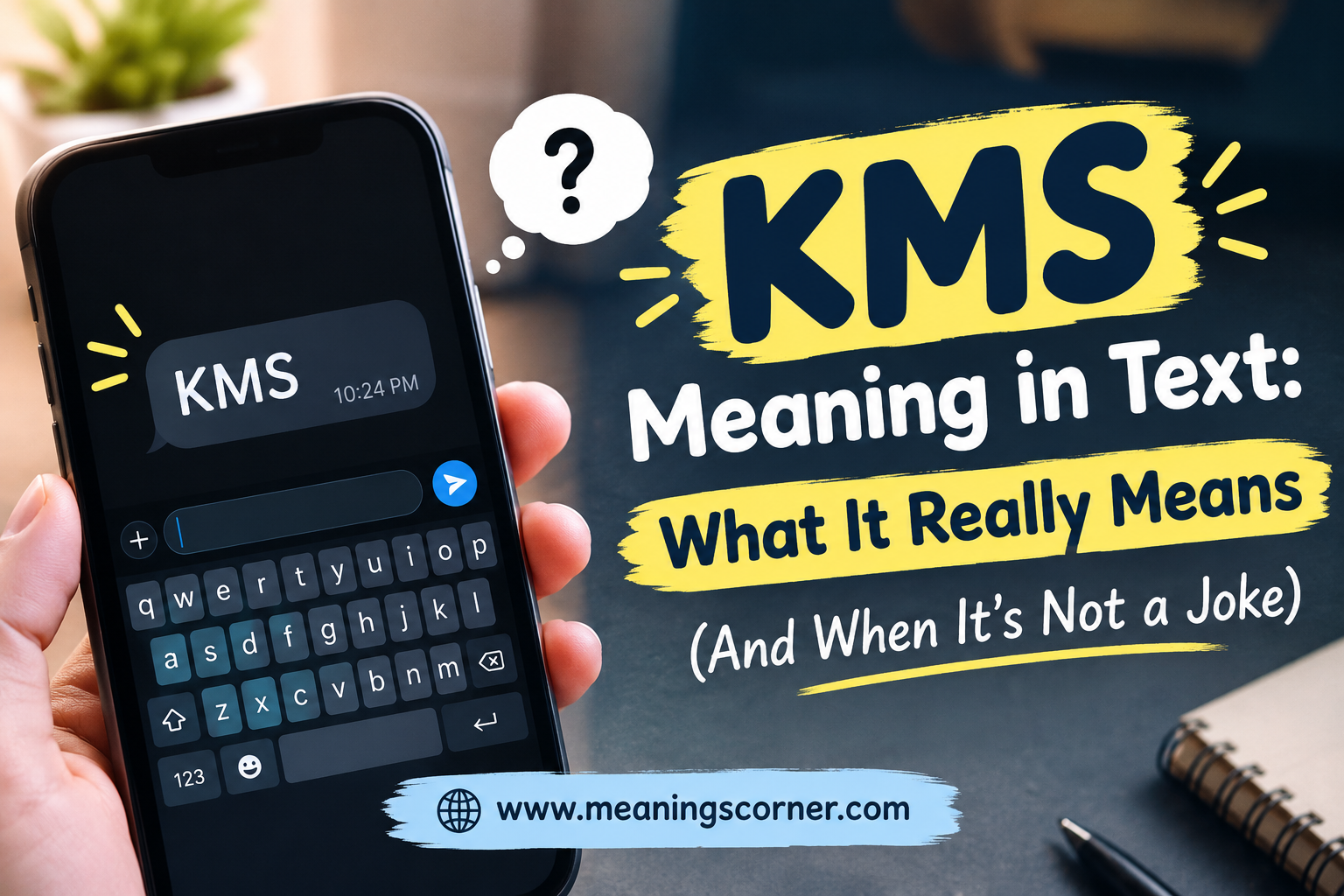
KMS Meaning in Text: What It Really Means (And When It’s Not a Joke)
You might think you know what “KMS” means, but in texting, it can mean different things. This acronym shows up in casual chats and serious discussions, so it’s important to understand its various meanings. This article explains the different uses of KMS and helps you tell when it’s a joke or signals a deeper issue. By the end, you’ll understand this popular acronym and how it affects conversations today.
So What Does KMS Actually Mean?
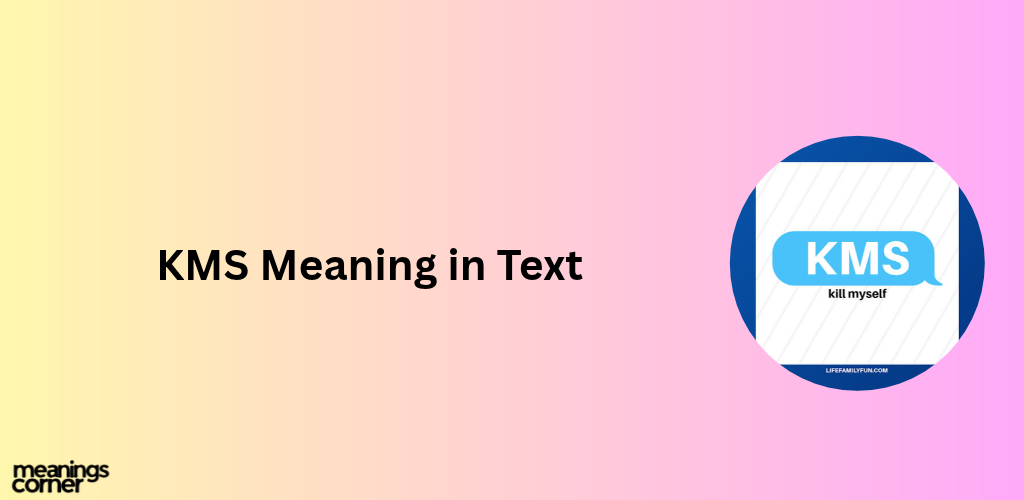
KMS stands for “kill myself,” but it means more than just the words suggest. Today, people use it online to express frustration, humor, and connection with friends. When someone says KMS, they usually don’t mean they want to harm themselves, instead it helps them cope with the stresses of modern life. This change shows how people use humor to hide their feelings, turning tough moments into shared experiences, even if it’s a bit shocking.
The use of KMS online also raises questions about mental health among young people. It’s important to distinguish between joking about feeling hopeless and asking for real help. While some use the phrase lightly, it highlights the need for honest talks about mental health. By encouraging these conversations, we can reduce the stigma around such feelings and turn a dark phrase into one that fosters understanding and connection.
Where This Slang Comes From
The slang term “KMS,” short for “kill myself,” often sounds like just an expression of frustration or a funny joke in casual talk. It has deeper meanings, especially among younger people facing social pressures and mental health issues. This phrase shows strong emotional reactions and highlights the need for real conversations about mental health, reminding us that words can have a big impact.
In online spaces, KMS can have mixed effects. While it might be seen as dark humor or a way for friends to bond over stress, it can also create misunderstandings about the seriousness of suicidal thoughts. Using it as a joke can downplay the real struggles some people face. As we become more aware of mental health, it’s important to understand what these words can mean. Recognizing when they express real pain can help us support those who need it or encourage them to seek help.
You can also read our complete guide on 60 Long Good Morning Message to My Love: Romantic & Sweet
KMS in Real Texts — What It Looks Like
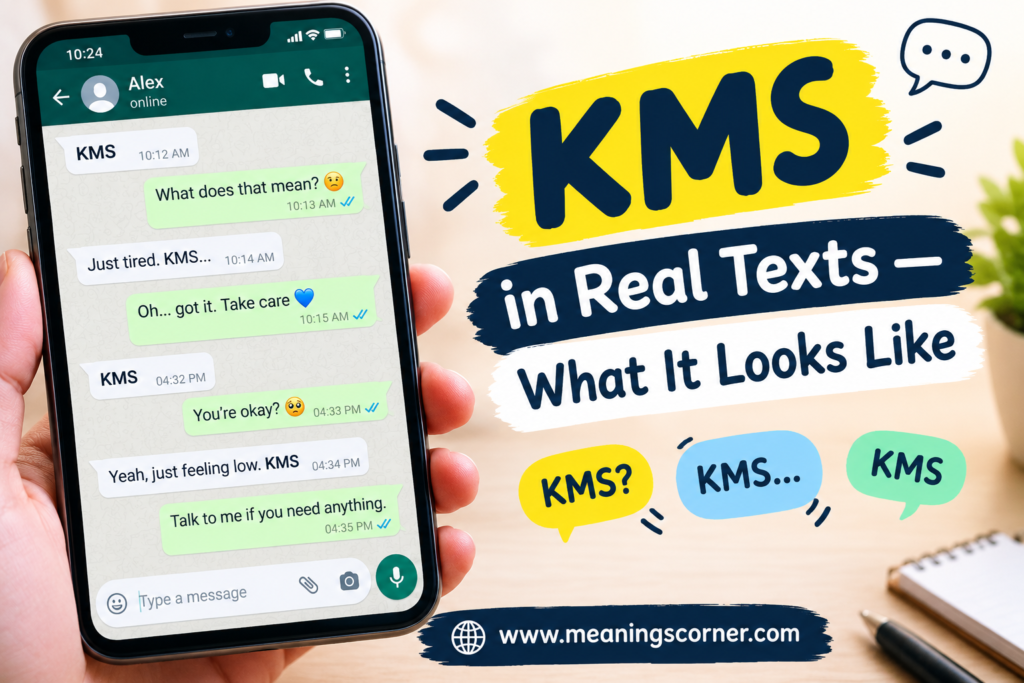
In today’s changing world of communication, “KMS” has different meanings, especially among young people. While it usually means “kill myself,” it’s important to understand the feelings behind it. In casual talks, people often use it to express frustration or feeling overwhelmed, not as a serious cry for help. When someone says KMS after a tough week or a bad exam, they usually want empathy, not panic.
Though, “KMS” shows deeper issues. In conversations about mental health, it can reveal someone’s pain or sadness. This highlights the need to recognize the feelings behind the words, rather than just judging them. In these situations, showing genuine care and having open discussions are essential. This turns a simple text into a chance for connection. By recognizing this, we can create a culture where mental health is openly talked about, and support is easily available, blending humor with real expressions of vulnerability.
You can also read more about Skink Meaning in English: Simple Explanation with Examples
KMS, KYS, and KMSL — Don’t Mix These Up
KMS (Kill Myself): This expression often shows deep sadness. If you or someone you know feels this way, it’s important to talk to someone who can help.
KYS (Kill Yourself): This phrase is harmful and promotes self-harm. If you see it, it’s vital to reach out for support.
KMSL (Killing Myself Laughing): This is a joking way to say something is funny. It’s not serious and doesn’t mean anything harmful.
Remember to use these terms carefully.
Where KMS Shows Up (TikTok, Snapchat, Discord, and More)
KMS, or Knowledge Management Systems, are changing how we use platforms like TikTok, Snapchat, and Discord. On TikTok, creators use detailed tagging and categories to help users find content easily. This boosts engagement and helps build personal brands and niche communities where users can share relevant information, making the experience better for everyone.
On the other hand, Discord’s server structure supports more direct conversations. Users can create specific channels for different topics, allowing for real-time exchanges of knowledge. This setup promotes collaborative learning, where members share insights and skills, enriching the community. As these platforms grow, KMS will play a key role in how we share, work together, and build knowledge in our digital world.
Is It Always a Joke?
KMS usually stands for “kill myself.” People often use it jokingly to express frustration or annoyance. For example, someone might say KMS when they face a tough homework assignment.
It’s important to recognize when KMS is serious. Some people may use it to express deep feelings of sadness or hopelessness. If someone seems upset and uses KMS, it’s crucial to check on them and offer support.
Always consider the context. If you see KMS in a light-hearted chat, it might be a joke. If it’s in a serious conversation, it could signal that someone needs help. Always be attentive to others’ feelings.
What If You’re Not Sure Someone’s Joking?
When you see someone use “KMS” in a text message, it can be difficult to tell whether they’re joking or expressing genuine distress. If you’re wondering what does KMS mean in text, it commonly stands for “kill myself.” On social media and in casual conversations, people sometimes use it as an exaggerated reaction to embarrassment, frustration, stress, or an awkward situation. However, the KMS meaning text can depend on the context, the person’s tone, and what they’re going through. If someone uses KMS repeatedly, sounds unusually hopeless, or mentions wanting to die, it’s important not to dismiss their words as a joke. Instead, check in with them privately, ask if they’re okay, and give them a chance to explain how they really feel. When you’re unsure whether someone is joking, taking their message seriously and responding with kindness is always better than making assumptions.
Places You Shouldn’t Use “KMS”
1. Group Chats About Mental Health
In group chats focused on mental health, emotional support, or coping strategies, using KMS casually can make serious conversations feel less important. Although some people use the term jokingly, others may be struggling with real emotional challenges. Avoiding this slang in sensitive discussions helps create a supportive environment where everyone feels comfortable sharing their feelings.
2. Workplace Communication
The workplace is another setting where you should avoid using KMS slang. Colleagues may misunderstand your message, especially if they are unfamiliar with internet slang or interpret your words literally. Using professional and respectful language instead can prevent unnecessary confusion and help maintain a positive workplace reputation.
3. Conversations With Someone Experiencing Emotional Distress
If someone is dealing with anxiety, depression, or personal difficulties, using KMS as a joke may make them feel uncomfortable or misunderstood. Even if you intend it as humor, the expression can be upsetting to someone going through a difficult time. If you’re unsure what does KMS stand for slang means to the person using it, consider the context and respond with empathy rather than making assumptions.
4. School and Educational Settings
Using KMS in classrooms, school group chats, or conversations with teachers can lead to misunderstandings. Students may use the term to express frustration about exams, assignments, or grades, but others might interpret it as a genuine expression of distress. Choosing clearer and less sensitive language helps avoid confusion and promotes respectful communication.
5. Professional Emails and Online Discussions
Professional emails, business messages, and public online discussions are not ideal places for KMS slang. People from different backgrounds may interpret the acronym differently, and its meaning can easily be misunderstood without context. Instead of using KMS, express frustration directly with phrases such as “I’m feeling overwhelmed” or “This situation is really stressful.”
Better Things to Say Instead
Instead of using KMS to express frustration, embarrassment, or stress, you can choose words that communicate your feelings without causing misunderstandings. For example, phrases like “I’m so overwhelmed,” “I can’t deal with this right now,” or “This is so embarrassing” can express your emotions in a more appropriate way. If you’re chatting with friends, you might say “I’m done with today” or “This is too much for me” to keep the conversation casual without using potentially harmful slang. In professional settings, phrases such as “I’m feeling stressed about this task” or “I need a moment to regroup” sound clearer and more respectful. Understanding what does KMS stands for slang also helps you recognize why choosing alternative expressions matters, especially in sensitive conversations. By using thoughtful language, you can express your feelings honestly, avoid unnecessary misunderstandings, and communicate in a way that respects both your emotions and the people around you.
Other Meanings of KMS (Not Slang)
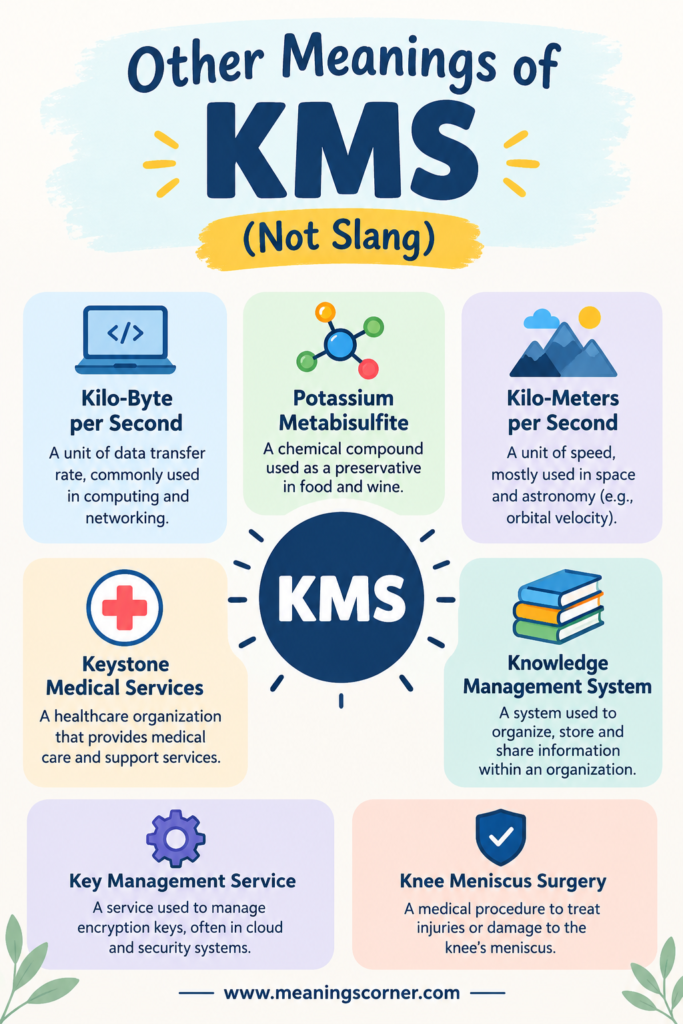
KMS can mean “Key Management Service,” an important part of cybersecurity. This service helps organizations create, manage, and use cryptographic keys safely. By keeping sensitive data secure from unauthorized access, KMS helps build trust and meet regulatory requirements. Companies using KMS can work confidently in the cloud while protecting their digital assets from breaches.
Another meaning of KMS is “Knowledge Management System.” These systems help organizations gather, share, and use knowledge effectively. By making information easily accessible, KMS tools allow teams to collaborate and innovate better. This approach improves decision-making and encourages continuous learning, ensuring valuable insights contribute to the organization’s growth.
Conclusion
In conclusion, knowing what KMS means in texting is important. It can show different feelings based on how someone uses it. Some see it as a joke, while others might share real pain or fear. Understanding this difference can change how we reply to friends who use the term. It’s vital to respond with kindness and think about how the sender feels. Stay aware of these details to improve communication and support each other when it’s needed.
FAQs
What does KMS mean in text?
KMS stands for “kill myself” in text messages and online conversations. People often use it as slang to express frustration, embarrassment, stress, or disappointment. However, its meaning depends on the context, and it should not always be assumed to be a joke.
What does KMS mean on social media?
On social media platforms like TikTok, Instagram, Snapchat, and Discord, KMS is commonly used as an exaggerated reaction to awkward, frustrating, or embarrassing situations. While many users intend it humorously, the phrase can sometimes indicate genuine emotional distress.
How can you tell if someone is joking when they say KMS?
It can be difficult to know whether someone is joking based on a text message alone. Consider the conversation, their recent behavior, and whether they express feelings of hopelessness or mention wanting to die. If you’re unsure, check in with them directly by asking, “Are you okay? Do you mean that seriously?” Taking their words seriously can help ensure they receive support if needed.
Is it okay to use KMS as a joke in text messages?
Although KMS is often used jokingly among friends, it may make others uncomfortable or minimize the seriousness of suicidal thoughts. It’s best to avoid using it in sensitive conversations, mental health discussions, or professional settings. Choosing alternatives like “I’m so overwhelmed” or “This is incredibly frustrating” allows you to express your feelings more clearly and thoughtfully.