
Casi Algo Meaning: What “Almost Something” Really Means in Love and Life
The term “casi algo,” or “almost something,” captures this delicate gray area many experience in matters of love. Picture this: you’re dating someone who feels significant yet remains undefined. This phenomenon is beautifully encapsulated by the phrase “casi algo,” meaning “almost something.”
In this article, we’ll explore what casi algo means, where it fits within the fabric of relationships, and how it has evolved into a modern-day expression of love and emotional connection. Armed with this knowledge, you’ll better navigate your own romantic dynamics and understand what it implies for your life’s journey.
What Does Casi Algo Mean?
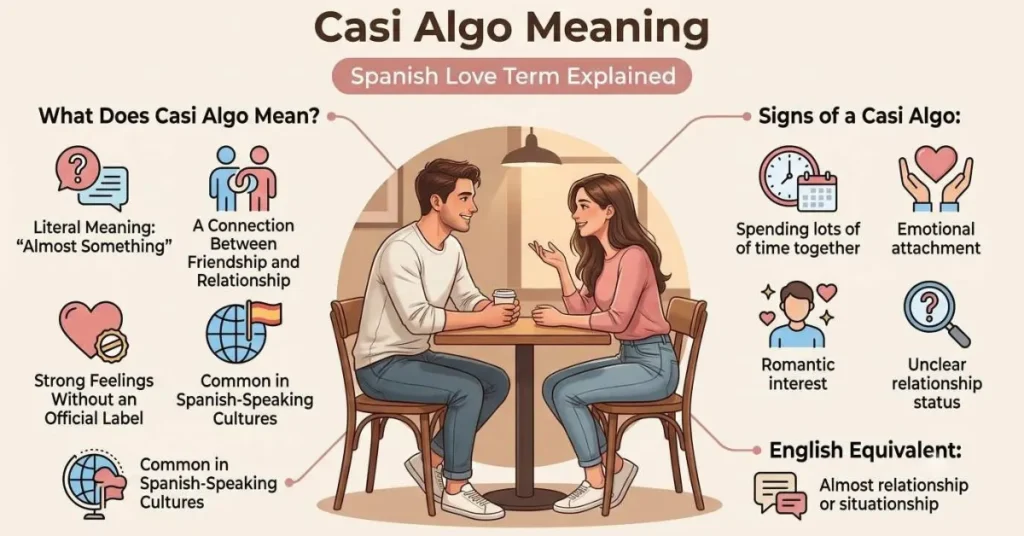
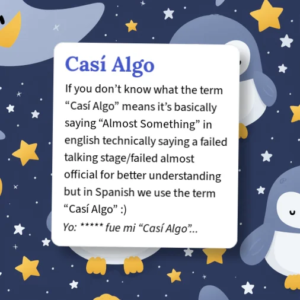
Casi Algo, a Spanish phrase, translates to “almost something” in English. This term encapsulates the beauty of imperfection and the delicate nuances of human connection. It also reflects the experiences we encounter in our daily lives — moments that flit between excitement and disappointment, or relationships that dance on the edge of intimacy without fully crossing that threshold.
In modern usage, casi algo describes a connection — usually romantic — that feels real and emotionally loaded, but never gets a name or a label. It sits in the gray zone between friendship and a committed relationship. More than casual, less than official. Deeply felt, but frustratingly undefined.
Through this lens, we can appreciate the beauty that exists in these in-between moments, acknowledging them as vital elements of our personal narratives.
The Origin of Casi Algo
Casi algo took root in Latin American youth culture, particularly in Mexico, Colombia, and Spain, during the early 2010s, emerging as a multifaceted phrase that resonates deeply with contemporary experiences of love and connection.
As dating apps transformed how people met and connected, and as social media platforms like Instagram, Twitter, and later TikTok gave everyone a stage to share their emotional lives, the term traveled fast. Its roots trace back to the mid-2010s, when it began infiltrating YouTube relationship videos, where influencers explored the nuances of dating and emotional intimacy.
This catchy phrase quickly morphed into a cultural phenomenon, like snowball kiss meaning encapsulating the feelings of something that is “almost” a relationship, striking a chord with young audiences unsure of their romantic status. By 2020, it had become a defining phrase of modern dating culture — not just in Latin America, but globally, especially in bilingual Gen Z and Millennial communities.
Songs like “Tu Casi Algo” by Xavi helped romanticize and amplify the concept, making it resonate with young people who immediately recognized the feeling being described.
Casi Algo Meaning in English
In English, casi algo translates most naturally to “almost something”. Some people also render it loosely as “the almost relationship” when they’re explaining it to friends who don’t speak Spanish. There’s no single perfect English equivalent, which is part of why the Spanish phrase has caught on with English speakers instead of being fully translated.
The closest English slang term is “situationship,” but casi algo carries a slightly different emotional tone. It leans more into longing and unfinished business, while situationship tends to describe an ongoing undefined arrangement. Casi algo often refers to something that already ended.
Casi Algo in Relationships: What It Looks Like in Real Life
A casi algo doesn’t follow one script, but it usually shares a common pattern: emotional closeness without commitment, and effort without a defined future.
Here’s what it typically looks like:
- The “What are we?” conversation never happens
- Physical or emotional intimacy without exclusivity
- Meeting friends or family, yet avoiding relationship labels
- One or both people feel something deeper, but nobody says it out loud
- A slow fade or sudden stop instead of a clear ending
It’s the talking stage that never graduates into a relationship. It’s the person you introduce as “a friend” while your heart does something completely different. It’s real feelings without a real definition.
Real-Life Examples of Casi Algo
Here’s what casi algo tends to look like when it plays out in everyday life:
- Two coworkers who flirt constantly and get lunch weekly, but never actually go on a real date.
- A summer romance where you texted daily for months afterward, but distance kept it from becoming official.
- Someone who says “I’m not looking for anything serious” but still acts deeply invested, remembering small details and checking in often.
- An ex you keep circling back to, with occasional late-night texts that never fully go away.
Each conversation is laced with longing, as the heart aches for what could be, but the reality of physical separation reminds us of the uncertainty that defines such connections. In navigating these nuances, one may realize that sometimes the journey itself holds as much value as the destination.
Why Casi Algo Hits Different Than “Situationship”
Casi algo and situationship both describe undefined romantic connections, but casi algo carries an emotional, nostalgic weight that often escapes the sterile confines of a “situationship.” While situationships can feel clinical or neutral — lacking defined boundaries or expectations — casi algo thrives in the ambiguity of semi-committed feelings.
The Language Difference
Casi algo, a term that translates to “almost something” in English, captures a nuanced emotional landscape far richer than the typical “situationship.” While both terms suggest a relationship that lacks clear labels, the language difference in “casi algo” signifies a deeper complexity. Casi algo borrows the emotional texture of Spanish, a language that leans into feeling rather than clinical labels. Saying “we were a casi algo” sounds like telling a small, bittersweet story. Saying “we were in a situationship” sounds more like describing a category.
The Cultural Difference
The cultural difference in personal expressions of love and intimacy plays a crucial role. Casi algo taps into a long tradition in Latin music of romanticizing the near-miss, the one that got away. That’s a big reason English speakers have started borrowing the Spanish phrase instead of sticking with their own. It simply feels more emotionally honest.
The Emotional Psychology of a Casi Algo
Psychologically, a casi algo can be harder to process than a clear breakup. There’s no defined relationship to mourn, yet the emotional investment was real. Without a label, the undefined nature of the connection creates a push-pull psychological experience:
Why It Can Feel Like Ambiguous Loss
This is sometimes called ambiguous loss — a term used in psychology to describe grief over something that was never clearly defined or resolved. There was no official title and often no real closure conversation. So people can end up replaying “what if” scenarios longer than they would after a defined relationship.
Why the Uncertainty Feels So Intense
The uncertainty itself can also make casi algo situations feel more intense while they’re happening. Not knowing exactly where you stand can create anxiety that mimics excitement. That keeps emotional energy locked in, even when nothing concrete is moving forward.
What does “mi casi algo” mean?
“Mi casi algo” means “my almost something” and refers to a specific person who occupied that undefined romantic space in someone’s life, rather than the general concept itself.
Casi Algo Beyond Romance: Other Uses of the Phrase
Casi algo isn’t limited to romance. People also use it to describe near-misses in Career: A promotion that was hinted at for months but never delivered. A job opportunity that almost materialized. The feeling of professional near-success.
Friendships: A close connection that almost became a deep friendship, but faded before it got there.
Dreams and goals: A project, a business idea, or a personal milestone that felt within reach but slipped away.
And in any situation where something meaningful seemed within reach but never fully materialized. Someone might describe a job offer that was verbally promised but never finalized as “a total casi algo situation.”
Casi Algo on Social Media and in Pop Culture
Casi Algo reflects the dynamic interplay between Spanish-language music and the ever-evolving landscape of social media, particularly platforms like TikTok and Instagram. Where users post videos, captions, and memes describing their own almost-relationships using the phrase. Hashtags built around the term have racked up significant engagement as people share relatable stories of romantic near-misses, often paired with music that reinforces the bittersweet, nostalgic tone of the phrase.
Spanish-language songs have also kept the phrase culturally relevant, using “casi algo” or similar lyrics about love that almost happened. Because streaming makes these songs accessible to English-speaking listeners too, the phrase has traveled well beyond Spanish-speaking audiences and into general internet slang.
What Reddit Users Say About Casi Algo
Reddit users often share personal stories that illuminate the multifaceted experiences of using Casi Algo in the realm of dating and relationships. Common threads include people processing confusion over where they stood with someone, and comparing the term to situationship to figure out which one better fits their experience. The overall tone tends to be reflective rather than purely negative — people use the term to make sense of a confusing chapter.
How Urban Dictionary Defines Casi Algo
User-submitted entries on sites like Urban Dictionary generally describe casi algo as a relationship that felt real but was never officially confirmed, echoing the same “almost, but not quite” definition found across mainstream sources. Wording varies by entry, since these definitions are crowdsourced, but the core idea stays consistent.
How to Navigate a Casi Algo Situation
The healthiest way to handle a casi algo is to get clarity as early as possible.
Ask for Clarity Early
Ask directly and Pay attention to their actions as much as their words. Consistent effort usually says more than any label ever could.
Know When to Walk Away
If the connection isn’t moving toward something clearer after a reasonable amount of time, be honest with yourself. Casi algo situations can feel comfortable precisely because they involve less risk. But that same lack of risk can also mean a lack of real investment from one or both sides.
Give Yourself Permission to Grieve
It also helps to give yourself permission to grieve a casi algo, even without an official title attached. The connection and time you invested were real, even if the outcome never was. Don’t let one casi algo experience convince you that undefined connections are always doomed.
FAQs
What does casi algo mean in slang?
“Casi algo” translates literally from Spanish to “almost something,” and in modern relationship slang, it describes a deep romantic connection that felt very close to becoming an official relationship but never quite got the label.
What does casi algo mean in English?
Casi algo means “almost something” in English. It describes a romantic or emotional connection that felt real and significant but never became an official, defined relationship.
Where did casi algo come from?
Casi algo comes from everyday Spanish vocabulary, combining “casi” (almost) and “algo” (something). Its use as a relationship term grew out of Latin American and Spanish youth culture in the 2010s, later spreading through music and social media.